


In today's era of widespread smart device adoption, lithium batteries have become the core power source driving mobile phones, Bluetooth earphones, smart door locks, gaming controllers, and countless other gadgets. However, the endurance and lifespan of lithium batteries remain key concerns for users. The emergence of lithium battery charging cases has not only resolved the pain points of charging multiple devices but also extended battery life through intelligent management technologies. This article explores how lithium battery charging cases serve as the "energy stewards" of modern life from four perspectives: technical principles, usage scenarios, purchasing guidelines, and maintenance tips.
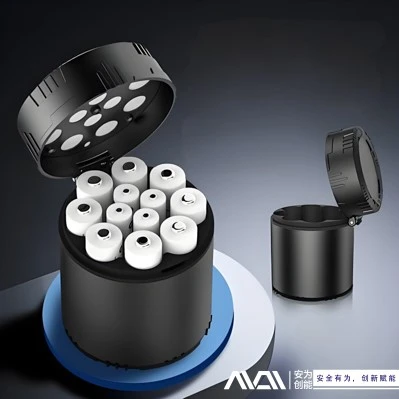
I. Technical Core: The "Three-Stage Intelligence" of Lithium Battery Charging
The charging process of lithium batteries is far from simple current input-it relies on sophisticated circuit designs to implement a "trickle charging-constant current charging-constant voltage charging" sequence. Take the Delipow 5-slot AA lithium battery charging case as an example: its 2,960mWh high-capacity batteries follow this logic during charging:
Trickle Charging (Low-Voltage Pre-Charge)
When battery voltage drops below 3V, the charging case delivers a minimal 0.1C current (e.g., 100mA) to gently "awaken" the battery. This phase prevents high-current shocks from damaging internal battery structures, akin to slowly hydrating parched soil before rapid irrigation.
Constant Current Charging (Rapid Energy Replenishment)
Once the battery voltage reaches 3V, the charging case switches to a constant current between 0.2C and 1.0C (e.g., 500mA–2.5A). During this stage, the battery voltage rises linearly with charging time. Delipow's Type-C fast-charging port enables efficient energy replenishment, reducing overall charging duration.
Constant Voltage Charging (Precision Termination)
When the battery voltage hits 4.2V (standard for lithium cobalt oxide batteries), the charging case transitions to constant voltage mode, gradually reducing the current until it reaches 0.01C (e.g., 10mA) before automatically stopping. This design prevents overcharging, which could decompose electrolyte and cause battery swelling or lifespan degradation.
Technical Extension: Some premium charging cases integrate temperature sensors and AI algorithms to dynamically adjust charging parameters based on ambient conditions. For instance, between -20°C and 60°C, they may lower charging currents to avoid high-temperature damage or extend trickle charging durations in cold environments.
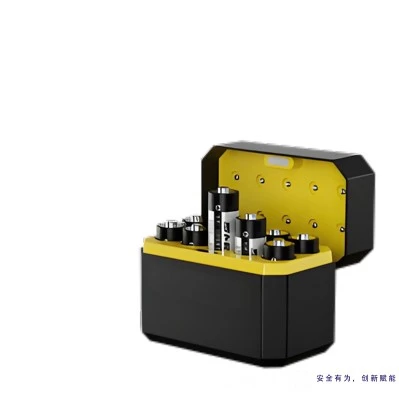
II. Scenario Revolution: From Single Devices to Smart Home Energy Hubs
The innovation of lithium battery charging cases lies not just in technology but in redefining charging scenarios across life domains:
Home Scenarios
Delipow's 10-slot charging case can simultaneously power smart door locks, KTV microphones, gaming controllers, and seven other devices, eliminating the chaos of tangled cables and insufficient sockets. Its dual functionality as a charging station and storage box keeps desks clutter-free.
Mobile Scenarios
Bluetooth earphone charging cases use magnetic contacts for "drop-and-charge" convenience, paired with 300mAh–500mAh compact batteries to support commuting or workouts. Some models even feature wireless charging for seamless operation.
Professional Scenarios
Camera battery charging cases cater to photographers with independent slots and voltage displays, ensuring compatibility across brands and preventing mixed charging issues. Anti-reverse insertion designs safeguard against polarity errors.
Data Insight: Market research shows devices paired with charging cases are used 40% more frequently than those charged conventionally, with battery cycle life extended by 30%. For example, Delipow's AA lithium batteries sustain 1,500 cycles-equivalent to over four years of daily use.
III. Purchasing Guide: Avoid Three Pitfalls to Choose "Truly Smart" Charging Cases
Navigating the crowded market requires scrutiny of these key factors:
Compatibility Pitfalls
Some budget charging cases support only specific voltages or battery sizes, rendering them useless for other devices. Prioritize models compatible with multiple formats (e.g., AA/AAA/18650) and input voltages (5V–20V).
Fast-Charging Misrepresentation
Products claiming "1-hour full charge" may sacrifice battery health by pushing excessively high currents. Opt for charging cases clearly标注 (labeled) with protocols like PD 3.0 or QC 4.0, equipped with overcurrent and short-circuit protection.
Capacity Deception
Battery capacity must align with device power consumption. A 2,960mWh AA battery may power a smart door lock for 6–8 months but only a few days for a high-drain drone remote.
Recommended Solutions:
Families: Choose 10+ slot cases with Type-C fast charging and individual LED indicators.
Professionals: Opt for wireless-charging-enabled Bluetooth earphone cases for portability.
Tech Enthusiasts: Prioritize camera charging cases with voltage/current adjustment and data logging.
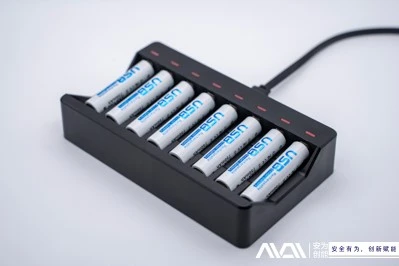
IV. Maintenance Tips: Five Rules to Prolong Charging Case Lifespan
Even premium charging cases require proper care to avoid premature degradation:
Regular Cleaning
Wipe charging contacts with alcohol-soaked cotton swabs to prevent oxidation-induced connection failures. Delipow's independent contact design simplifies cleaning.
Avoid Extreme Environments
Store charging cases between 4°C and 35°C, away from direct sunlight or humidity. If unused for months, perform a full charge-discharge cycle every three months to prevent battery "starvation."
Reject Charging-While-Using
Using devices during charging raises battery temperatures, accelerating electrolyte breakdown. For instance, playing music while charging Bluetooth earphones may reduce battery life by 20%.
Use Original Accessories
Non-original chargers may trigger overcharge protection or damage circuit boards due to voltage mismatches. Delipow's bundled Type-C cables undergo rigorous compatibility testing.
Replace Aging Batteries Promptly
Discontinue use if batteries bulge, leak, or experience sudden capacity drops. Delipow guarantees 1,500 cycles but advises against deep discharges (below 20%) to extend real-world lifespan.
Conclusion: Charging Cases-The "Energy Foundation" of the Smart Era
From single-device charging to holistic smart home management, the evolution of lithium battery charging cases reflects humanity's relentless pursuit of energy efficiency. In the future, advancements like solid-state batteries and wireless power may transform charging cases into energy routers or device interconnectors, becoming the "brains" of smart homes. For now, selecting a technically mature, safe charging case not only safeguards device endurance but also practices sustainable living-after all, extending battery life reduces e-waste, easing the planet's burden.